
"Costa Rican specialty coffee"
200 article(s) found

Costa Rican Coffee Story Why Costa Rican coffee tastes good
For more information on coffee beans, please follow the coffee workshop (Wechat official account cafe_style) Coffee was first introduced to Costa Rica from Cuba in 1779, commercial cultivation began in 1808, and Costa Rica first exported coffee in 1820. Costa Rica is considered to be the first country in Central America to produce coffee commercially, and the first batch of coffee arrived in the United States in 1860

Costa Rican Saint Roman Coffee Flavor Costa Rican Saint Roman Coffee
The coffee beans produced at the high latitudes of Costa Rica are famous in the world, full-bodied, mild in taste, but extremely sour. The coffee beans here have been carefully processed, which is why they have high quality coffee. Located in the south of SanJos, the capital of Tarasu, Costa Rica is one of the most valued coffee growers in the country. Tarazhu of Costa Rica (

Costa Rican Bach Coffee roasting suggestions Costa Rican Coffee Bean Flavor Story
Professional barista communication please follow the coffee workshop (Wechat official account cafe_style) coffee beans from Central America and Costa Rica, retain the original flavor in a moderately roasted way, smell the beans with roasted sugar after opening, the ground coffee powder has the aroma of sugar-fried chestnut shell, but it is full of citrus flavor into the throat, meticulous and smooth, except for hot drinks.

Costa Rican boutique coffee producing area introduces Costa Rican coffee flavor and characteristic Tarazhu coffee
Costa Rican coffee cultivation was introduced by Cuba in 1779 and exported for the first time in 1820. There are about 32000 coffee farmers, with an average planting area of less than one hectare (10000 hectares) per farmer. Costa Rica has a population of 41 billion (2006), with a coffee planting area of 82500 hectares and an annual production of 1.7 million bags (60kgs per bag). The annual domestic consumption is 380000 bags.

Costa Rican sun-dried coffee beans Costa Rican black pearl sun-dried cream taste
Professional coffee knowledge exchange more coffee bean information please follow the coffee workshop (Wechat official account cafe_style) front street-Costa Rica black pearl sun introduction Costa Rica black pearl sun introduction to Costa Rica coffee beans, I believe everyone knows, in recent years, with Costa Rica's boutique coffee beans popular all over the world, its high-quality taste and outstanding flavor
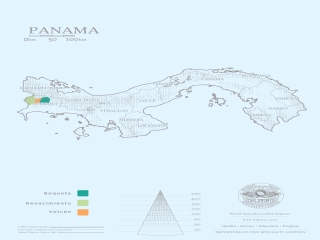
Grading of Panamanian coffee beans-an introduction to the grading system of Panamanian and Costa Rican coffee beans.
Generally speaking, the price of Panamanian coffee belongs to the low and medium price, but its performance in the cup is often as good as that of any famous or even expensive coffee producing area. The price of Panamanian specialty coffee is among the highest in the international market, after the Europeans first brought the first tin trucks to Panama in 1780.

Costa Rican Coffee Manor recommends the correct way to drink Costa Rican coffee
Professional coffee knowledge exchange more coffee bean information Please follow the coffee workshop (Wechat official account cafe_style) Finca and micro-mill La Cabana is owned by Javier Meza, who grows only red Catuai and Caturra on his 8-hectare farm. Havel historically harvests about 150 bags of exportable green coffee a year. In his mills and farms, he managed

Introduction of Costa Rican Lemon Manor introduction of flavor characteristics of Costa Rican coffee
Professional coffee knowledge exchange more coffee bean information Please follow Coffee Workshop (Wechat official account cafe_style) Lemon Manor is from the Tara Pearl producing area with the highest latitude in Costa Rica, coffee cherries are handled by the volley processing plant, which has more than 60 years of coffee processing experience, and the sun uses exquisite African scaffolding to make the coffee flavor as a whole.

Costa Rican Eagle Manor introduces the flavor characteristics of Costa Rican coffee.
Professional coffee knowledge exchange more coffee bean information Please follow Coffee Workshop (Wechat official account cafe_style) Eagle Manor (El Halcon) is one of several farms owned by the Navarro family, located in Tarrazu, the best coffee producing area in Costa Rica, at a very high altitude, all located at about 1900 meters, the owner is Enrique Navarro

Costa Rican Coffee Features Pilon Processing Plant Costa Rican Boutique Coffee Estate
Professional coffee knowledge exchange More coffee bean information Please pay attention to coffee workshop (Weixin Official Accounts cafe_style) Costa Rica's seven main coffee producing areas are distributed from northwest to southeast, along with the inland central plateau. Fertile ash from Colombia's volcanic terrain, mild temperatures and steady rainfall are all factors that have made coffee a major agricultural product in Colombia.

Costa Rican Mount Padu Manor introduces the taste characteristics of Costa Rican coffee
Professional coffee knowledge exchange more coffee bean information please pay attention to the coffee workshop (Wechat official account cafe_style) Padu Mountain (Cerro Paldo) is located in Los Santos District, coffee trees are planted as high as 1650 meters above sea level, and the area of growing coffee is only 1.5 hectares, so he chose to join the ASOPROAAA (ASO DE PROD DE ASER Y ACOST) cooperative.

The flavor of Costa Rican Mozart introduction to the characteristics of Costa Rican Mozart
Professional coffee knowledge exchange more coffee bean information please follow the coffee workshop (Wechat official account cafe_style) front street Costa Rican musicians series Mozart flavor characteristics Huang Kaduai from the New World and Kaddura hybrid, was first cultivated by Brazil (Continental Institute of Agricultural Research) INSTITUTO AGRONOMICO DE CAMPINAS in 1949. Yellow card

Costa Rican Ponte Manor introduces the flavor characteristics of Costa Rican coffee
For more information on coffee beans, please follow the coffee workshop (Wechat official account cafe_style). Ponte Manor, which is just over six years old, is located in the Leon Coretz area of the Tarazu producing area. It is one of the six cooperative manors set up by the six brothers of the Rodolfo Rivera family.

Is mocha coffee good? the difference between mocha and Costa Rican coffee
Exchange of professional baristas please pay attention to the coffee workshop (Wechat official account cafe_style) mocha coffee's characteristic flavor: it is fruity, with obvious wine, spicy and nutty flavor, some people say that the Yemeni mocha is very similar to blueberry taste, while others say it is the wild flavor unique to the Red Sea. Costa Rican coffee has the characteristics of full granules, ideal acidity and unique strong flavor.

Distribution of Costa Rican coffee beans the flavor characteristics of Costa Rican coffee
Professional coffee knowledge exchange more coffee bean information please follow the coffee workshop (Wechat official account cafe_style) the seven coffee producing areas of Costa Rica are distributed from northwest to southeast and inland central plateau. Costa Rican volcanic terrain has fertile volcanic ash, mild climate and stable abundant rainfall, making coffee one of the main agricultural products in Costa Rica. Costa Rican coffee since the 18th century

Flavor characteristics of Costa Rican coffee varieties in Costa Rican coffee producing areas
Professional Coffee knowledge Exchange more information on coffee beans Please follow Coffee Workshop (Wechat official account cafe_style) A highly regarded Costa Rican coffee, the typical coffee plant variety Caturra (Coffee Arabian variety Caturra), sometimes Catuai, has a huge body, usually full, rich, strong taste and crisp acidity. Especially

Costa Rican coffee the characteristics of Costa Rican coffee
Coffee was introduced into Costarica from Cuba in 1729. Today, its coffee industry is one of the most well-organized industries in the world. Costa Rica, with its fertile volcanic soil and good drainage, is the first country in Central America to grow coffee and bananas for commercial value. Coffee and bananas are the country's main exports. Coffee from Costa Rica

Why Costa Rican Coffee Is Called "Extra Hard Bean" Costa Rican Yellow Honey Coffee
Professional coffee knowledge exchange More coffee bean information Please pay attention to coffee workshop (Weixin Official Accounts cafe_style) High-quality Costa Rica coffee is called extra hard beans, which can grow at an altitude of more than 1500 meters. Altitude has always been a problem for coffee growers. Coffee beans are better at higher altitudes, not least because higher altitudes increase the acidity of the beans

Description of flavor of Costa Rican coffee bean black honey introduction to the taste of grinding scale varieties
How does Costa Rican coffee bean black honey brew flavor description grinding scale varieties taste introduction Costa Rican boutique coffee only began to come to the fore in the past decade. Although Costa Rica introduced coffee from Cuba as early as 1729 and carried out commercial cultivation, it made great efforts to develop the coffee bean industry. But it is mainly the production and distribution of comprehensive coffee beans and Italian commercial beans.

Costa Rican Coffee Costa Rican Coffee Bean
Professional coffee knowledge exchange More coffee bean information Please pay attention to coffee workshop (Weixin Official Accounts cafe_style) Costa Rica is bordered by the Caribbean Sea in the east and the Pacific Ocean in the west, just as the country's name means in Spanish: fertile coast. Costa Rica is located south of San Jos, the capital of Tarasu, and is one of the country's most valued coffee plantations. Tara